
Best QR Code Generators for Accepting PayPal Payments (2026)
· Updated · Scanlo Team

Contents
- How we compared these tools
- Static vs dynamic: the choice that decides everything
- Quick comparison
- 1. Scanlo - trackable PayPal QR codes
- 2. PayPal's built-in QR code - native and zero setup
- 3. QR Tiger - a full dynamic QR platform
- 4. Bitly (QR Code Generator) - for teams already using Bitly
- 5. QR Code Monkey - the best free static option
- 6. Canva - the best for a branded code
- What no QR code roundup tells you about PayPal codes
- How to make a trackable PayPal QR code
- How to switch without reprinting everything
- Which should you choose?
- Frequently Asked Questions
- Bottom line
Quick answer
For accepting PayPal payments, the best QR code generator comes down to one question: do you need to track and change the code after it is printed? Free tools like QR Code Monkey and PayPal's own app make a static code that can never be edited or measured. A redirect tool like Scanlo makes a dynamic, trackable PayPal QR you can edit anytime and compare across placements. This guide compares six options and who each one is for.
The best QR code generator for PayPal isn't the one with the prettiest code. It's the one that answers a question the screenshots hide: once the code is printed, can you still change where it points, and can you tell whether anyone scanned it? PayPal gives you three ways to make a QR (from the app, from a PayPal.Me link, or from a generator), and they look identical to the customer. What separates them is what happens after you print.
That one distinction, static versus dynamic, decides whether the code you print on 500 flyers survives your next PayPal.Me handle change or quietly turns into a dead link. This comparison skips the design-feature checklists and scores six tools on what actually affects getting paid: tracking scans, editing the destination after printing, and comparing one placement against another. We're also upfront about the trade-off most PayPal roundups bury.
How we compared these tools
A QR code for payments has a different job than a QR code on a poster. We weighted the comparison toward what affects getting paid and knowing whether it worked:
Trackable. Can you see how many people scanned the code, and ideally, where and on what device? PayPal alone shows you completed payments, not scans.
Editable after printing. If your PayPal.Me handle or destination changes, does the printed code still work, or do you reprint everything?
Placement comparison. Can you run a separate code on the counter, the flyer, and the invoice, and tell which one pulled the most payments?
Cost and honesty of pricing. Free static tools are genuinely free. Tracking sits behind a plan, and some "free" tools are really a funnel into expensive dynamic plans.
Fit for PayPal specifically. A general QR platform can point at a PayPal.Me link, but is it worth the price for a single payment code?
One thing we deliberately did not do: rank by feature count. The most feature-stuffed platform is rarely the right tool for a small business that just wants to be paid.
Static vs dynamic: the choice that decides everything
Every tool here makes one of two kinds of code, and this is the single most important thing to understand before you print anything.
A static QR code has the destination baked into the image itself. When someone scans it, their phone reads the link directly off the printed pattern. It is free and works forever, but it can never change, and no one can tell you it was scanned. PayPal's built-in QR and free generators like QR Code Monkey produce static codes.
A dynamic QR code points at a short redirect URL that you control. The scan hits the redirect, gets logged, and is forwarded to your real PayPal link. Because the printed image only ever contains the redirect, you can change where it sends people at any time, and every scan is counted. This is what makes tracking and placement comparison possible, and it is the category Scanlo, Bitly, and QR Tiger sit in.
If your code will live on a printout you cannot easily replace, or you want to know whether it is working, you want a dynamic code. If it is a one-off you will throw away, static is fine.
Quick comparison
Tool | Type | Trackable | Editable after print | Best for | Price |
|---|---|---|---|---|---|
Scanlo | Dynamic | Yes | Yes | Tracking and comparing PayPal QR placements | Free, paid from $9/mo |
PayPal built-in QR | Static | No | No | Fast, native in-person payments | Free (standard PayPal fees) |
QR Tiger | Dynamic | Yes | Yes | A full QR platform with many code types | Paid plans, free trial |
Bitly (QR Code Generator) | Dynamic | Yes | Yes | Teams already using Bitly | Freemium, tracking on paid |
QR Code Monkey | Static | No | No | A free, one-off static code | Free |
Canva | Static | No | No | A branded, designed code | Free or Pro |
Prices and limits change. Verify the current figures on each provider's site before you commit.
1. Scanlo - trackable PayPal QR codes
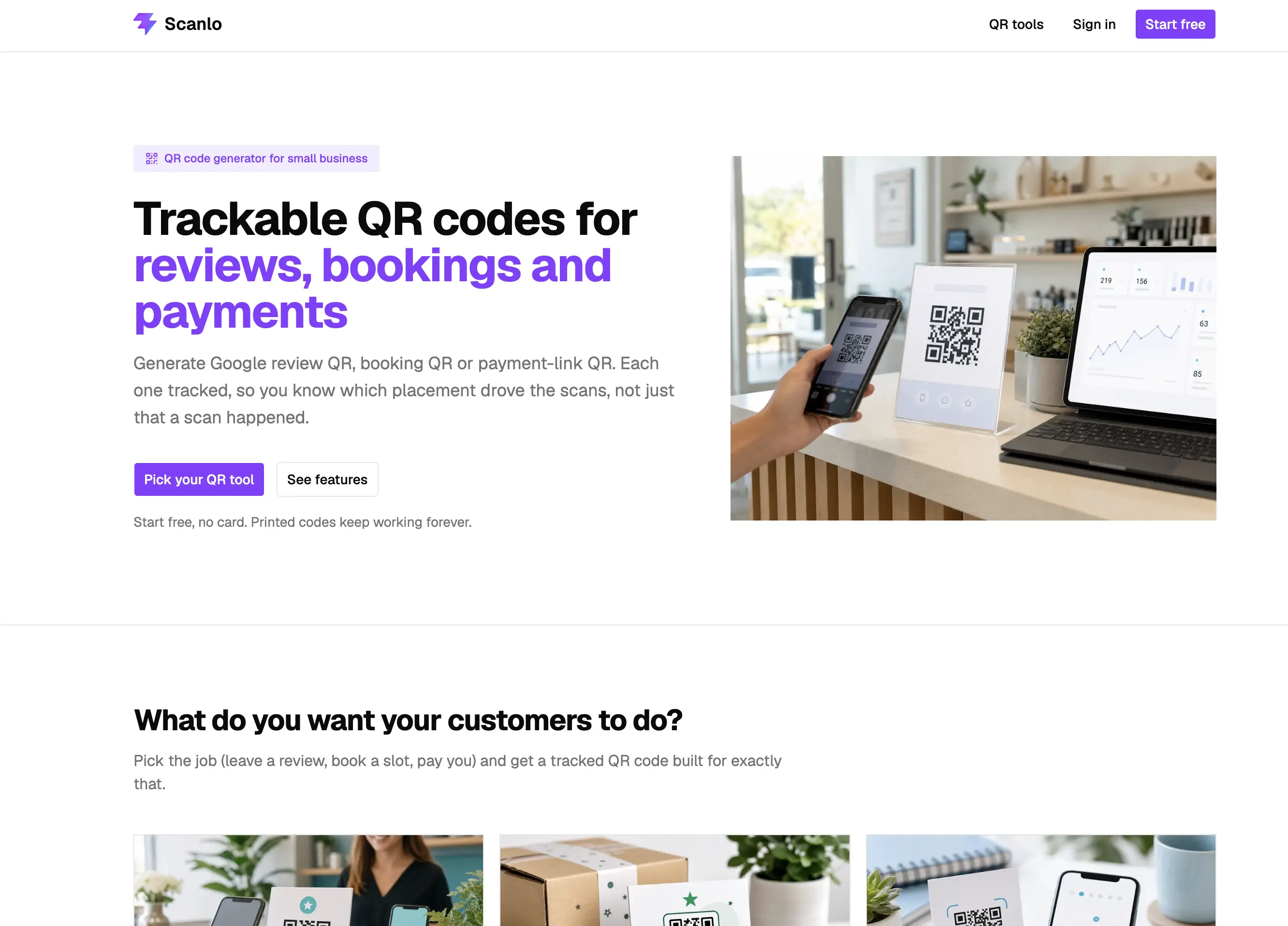
Scanlo is a dynamic QR built specifically around the question that other tools ignore: is this code actually working? It makes a QR that redirects to your PayPal.Me link and logs every scan, so you see how many people scanned, when, and from which device and country.
What it does well. The destination is editable forever, so a printed code never dies, even if you change your PayPal handle or run a seasonal promotion through it. You can create a separate code per placement (counter, flyer, table tent, invoice) and compare them side by side, which is the only honest way to learn where your QR earns its space. Export is PNG, SVG or PDF, so the code stays crisp at any print size.
What is missing. Scanlo is a tracking and redirect layer, not a payment processor and not a design suite. PayPal still handles the money, and if you want a heavily designed code you will style it elsewhere. It is also focused on the service-business use case rather than enterprise QR fleets.
Pricing. The free plan covers up to two tracked codes with 30 days of history, which is enough to compare two placements. Paid starts at $9/month billed yearly (or $18/month) and adds more codes, longer history, full analytics including country and device breakdowns, and removes Scanlo branding. A printed code keeps redirecting even if you downgrade or cancel; only the depth of reporting is gated.
Choose Scanlo if you want to know whether your PayPal QR is working and which placement performs best, without paying enterprise prices for a single payment link.
2. PayPal's built-in QR code - native and zero setup
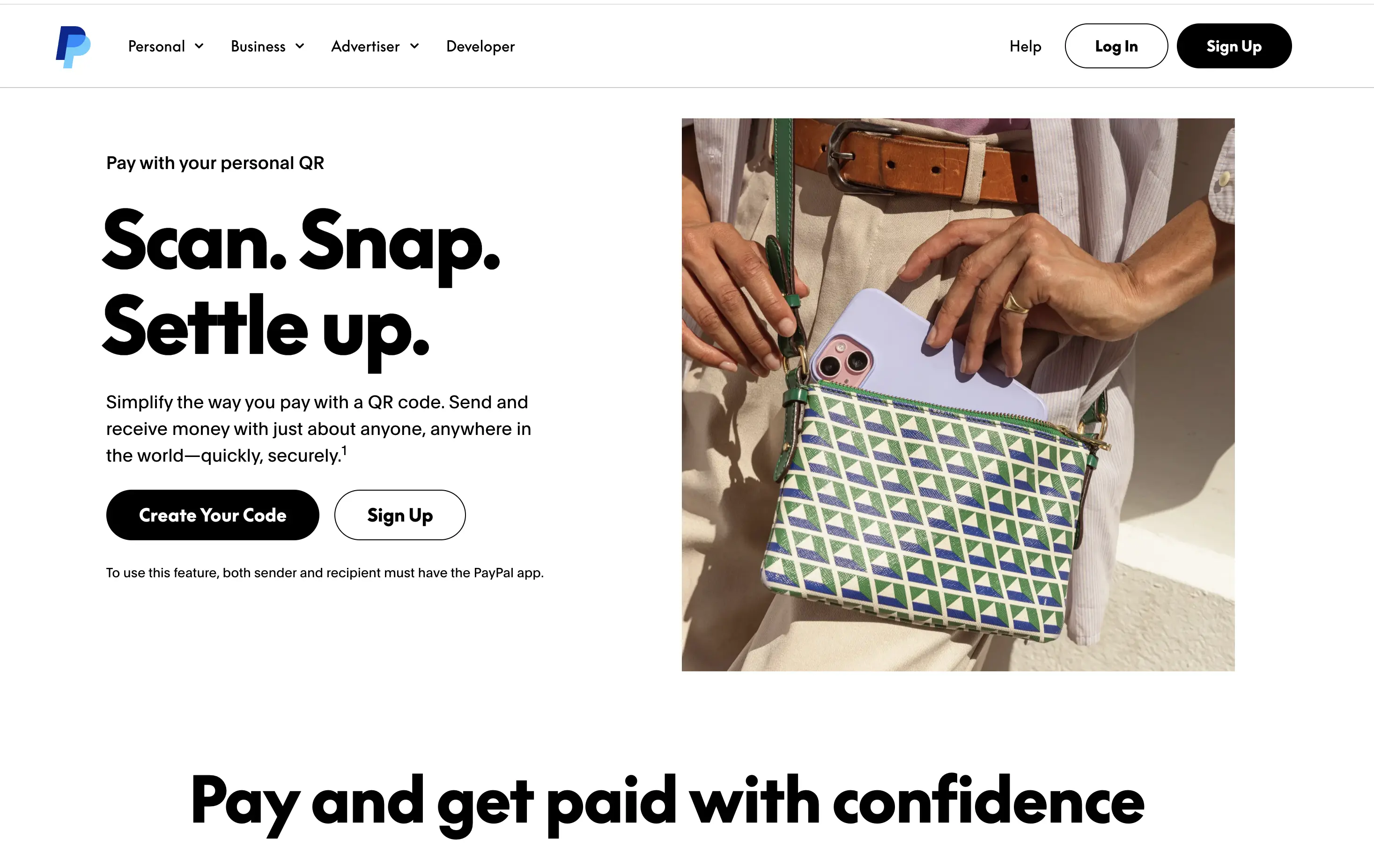
PayPal can generate a QR code for in-person payments directly inside the PayPal app, and for many sellers this is the obvious starting point. The money flows through PayPal with nothing in between, and there is nothing extra to sign up for.
What it does well. It is genuinely free to generate, it is native (no third party touches the transaction), and PayPal handles the payment experience your customer already trusts. For a sole trader taking the occasional in-person payment, it is often enough.
What is missing. The code is static, so you cannot repoint it later, and PayPal gives you no scan analytics. You see payments that completed, but never how many people scanned and abandoned, and you cannot compare a counter code against a flyer code because there is only one code. Standard PayPal goods-and-services fees apply to the payment, so confirm the current rate for your market.
Choose PayPal's own QR if you want the simplest possible native option and do not care about tracking or editing the code.
3. QR Tiger - a full dynamic QR platform
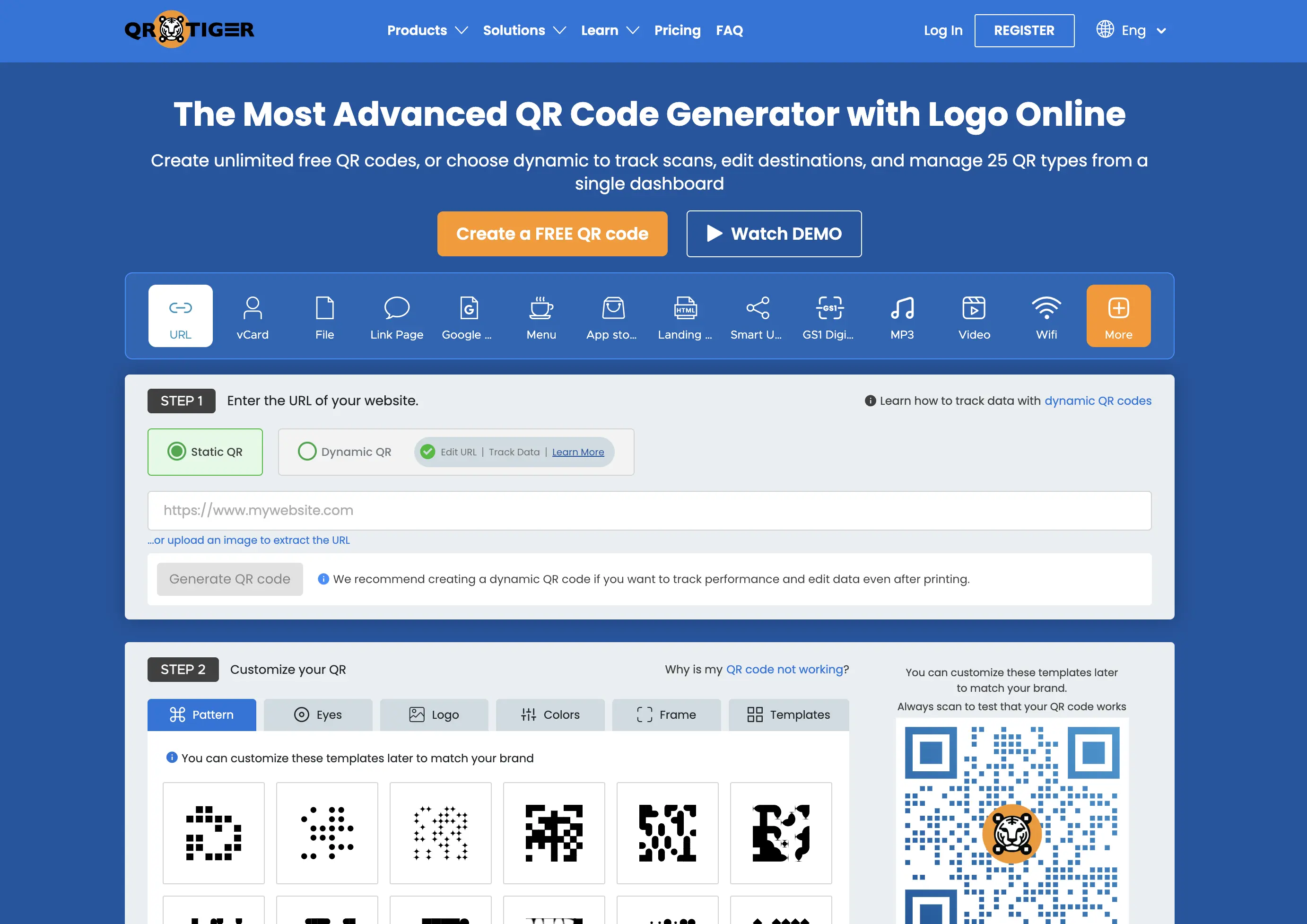
QR Tiger is a general-purpose dynamic QR platform with broad analytics, many QR code types, bulk generation, and integrations. It can point a tracked code at your PayPal.Me link like any other URL.
What it does well. It is feature-rich, with scan analytics, design control, and integrations that suit marketers running varied QR campaigns, not just payments. If you already need QR codes for menus, links, and packaging as well as payments, consolidating on one platform can make sense.
What is missing. It is not built for PayPal payments specifically, so you are buying a broad toolkit to solve one narrow job. Pricing tiers and billing terms vary, and the cheapest plan can be capped on scans or codes. Verify the current plan limits before assuming the entry price covers what you need.
Choose QR Tiger if you want one general dynamic QR platform for many use cases, and payments are only one of them.
4. Bitly (QR Code Generator) - for teams already using Bitly
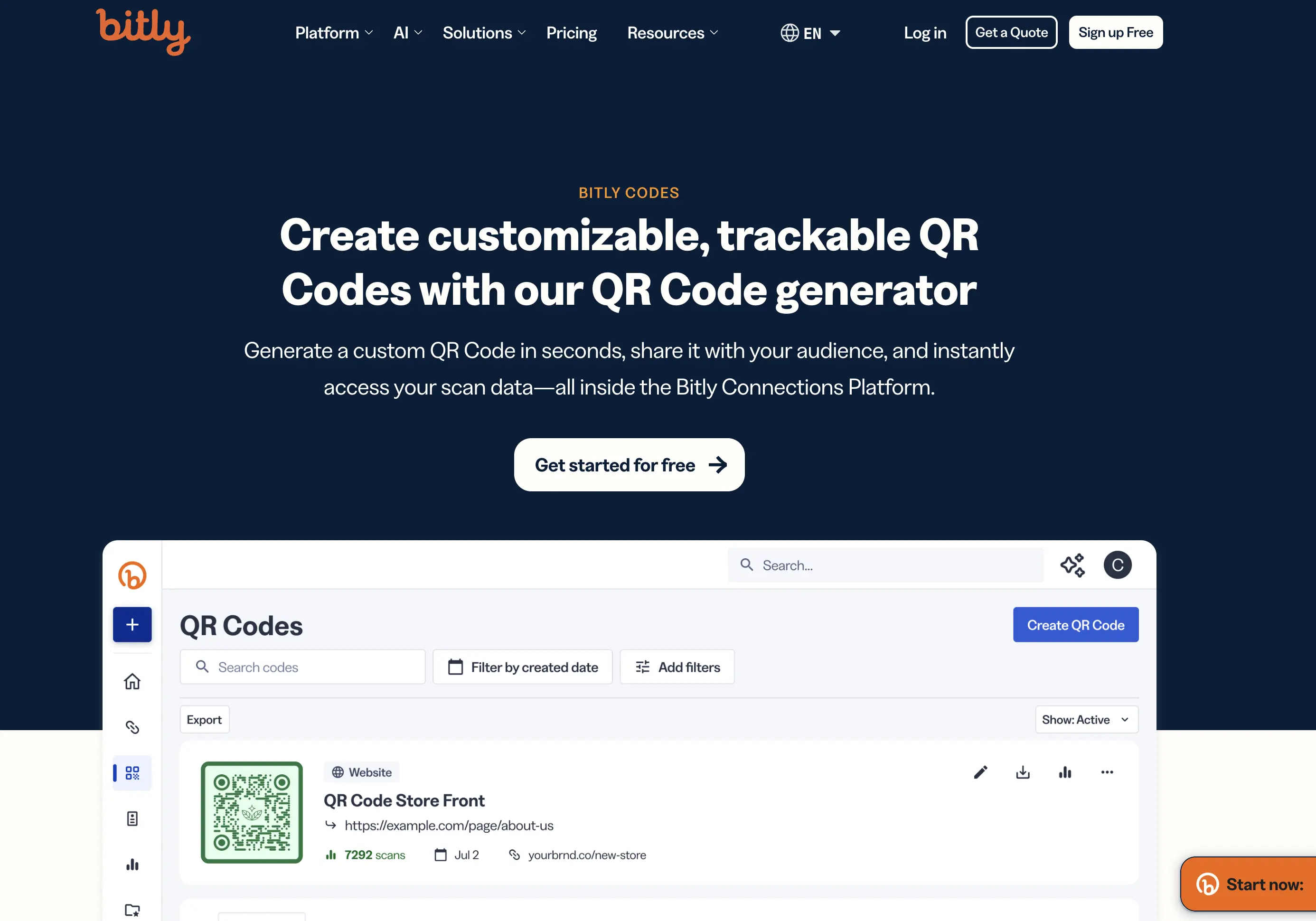
Bitly, the link shortener, includes a QR code generator that creates dynamic, trackable codes, available at qr-code-generator.com and inside Bitly itself. A code can point at your PayPal.Me link and report scans.
What it does well. If your team already pays for Bitly to manage short links, the QR feature is a natural extension with reporting you already understand, and the brand is well established.
What is missing. QR tracking generally sits on paid tiers, and for a business that only needs a payment code, paying for the wider Bitly platform can be more than the job requires. It is a link tool that added QR, not a payments-focused tool.
Choose Bitly if you are already invested in its ecosystem and want to keep everything in one dashboard.
5. QR Code Monkey - the best free static option
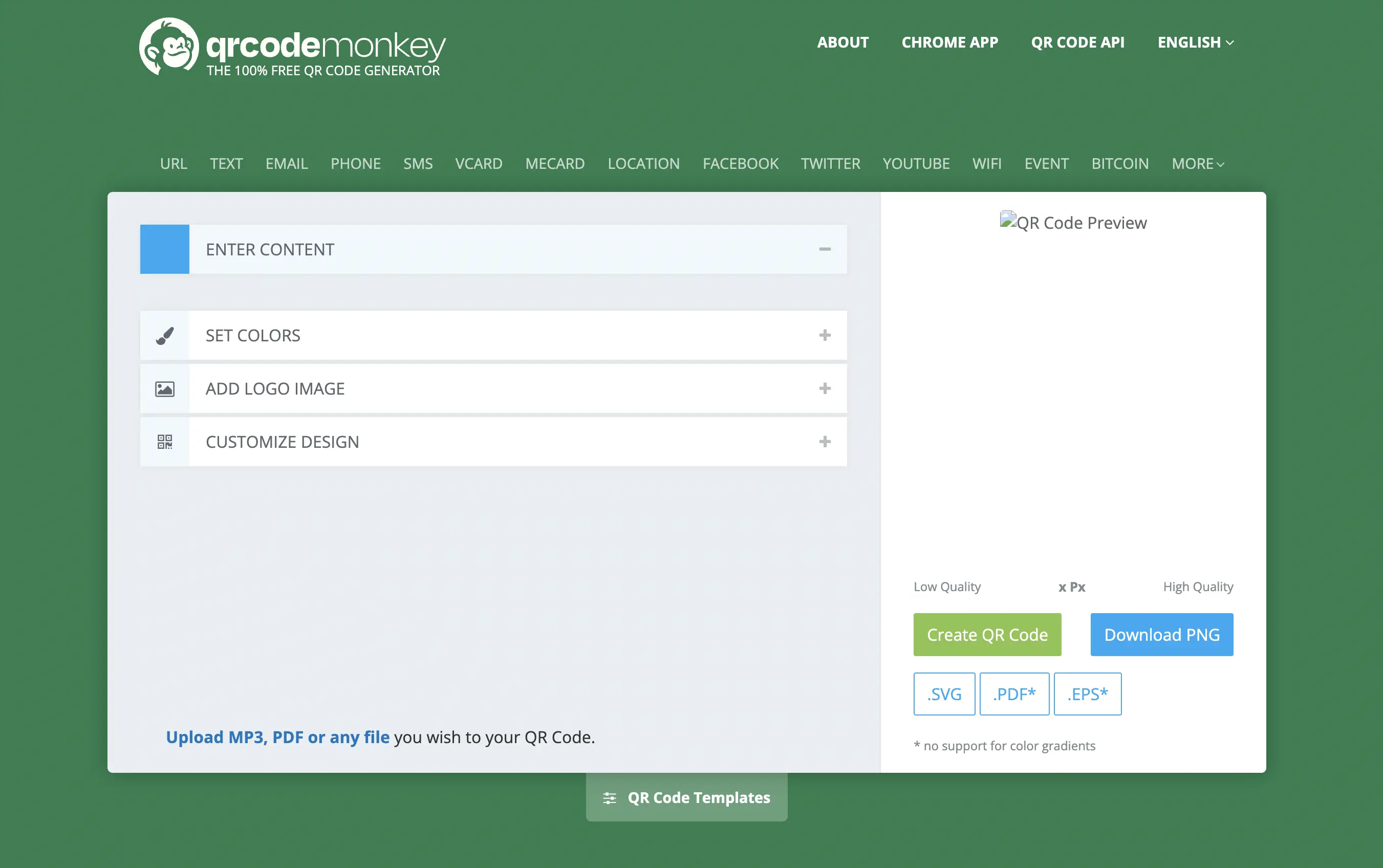
QR Code Monkey is a free generator with no account required and strong customization. Paste your PayPal.Me link, style the code with colors and a logo, and download a high-resolution image.
What it does well. It is free, fast, and produces clean, high-resolution codes with no sign-up. For a quick, one-time code you do not expect to change, it is hard to beat.
What is missing. The code is static, so there is no tracking and no editing once it is printed. Be aware that free static generators are often the front door to a paid dynamic platform; the free code is real, but the upsell is the business model.
Choose QR Code Monkey if you need a free, one-off static PayPal QR and accept that it can never change or be measured.
6. Canva - the best for a branded code
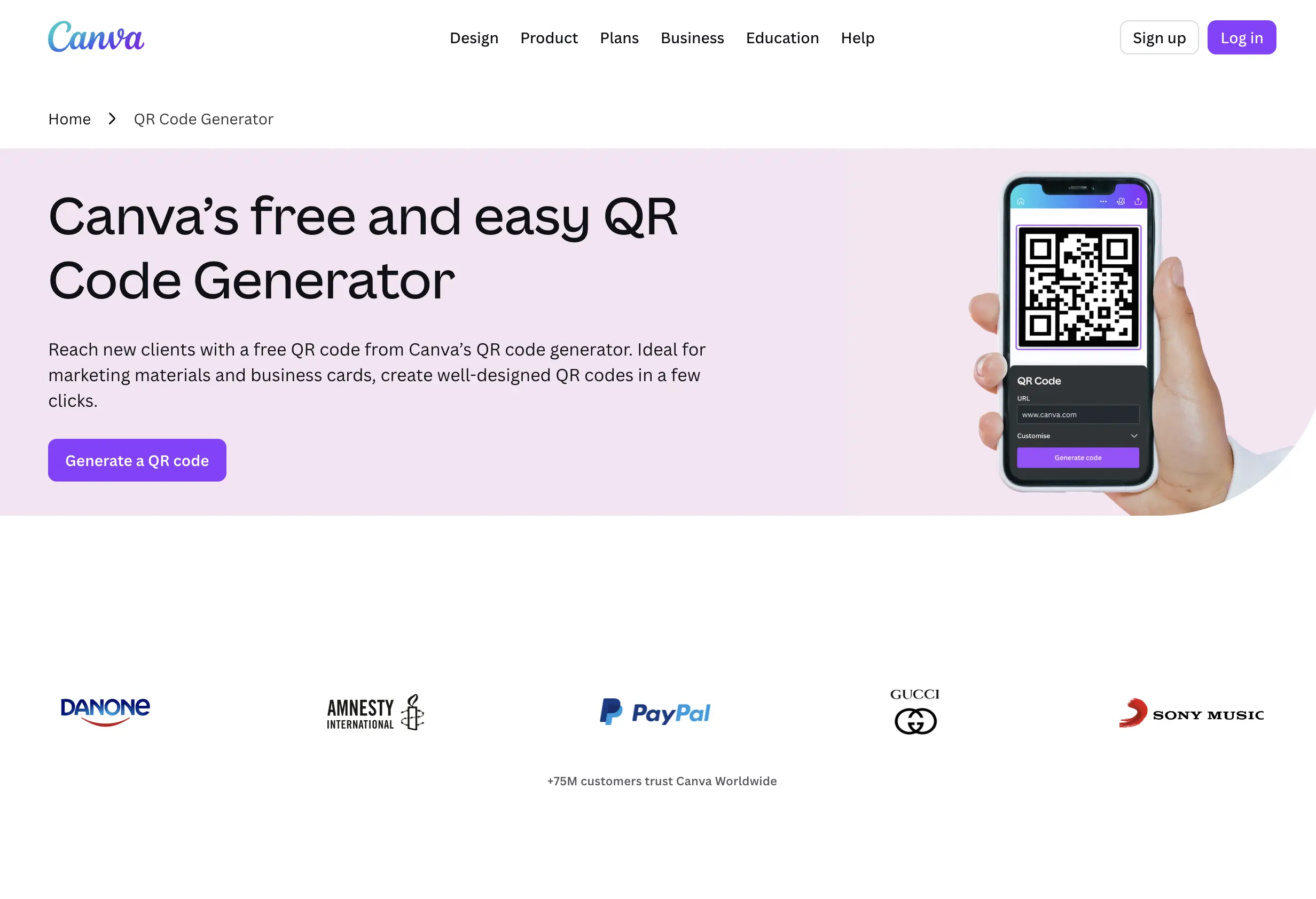
Canva includes a QR code generator inside its design editor, which makes it easy to drop a PayPal QR straight into a flyer, menu, or poster that already matches your brand.
What it does well. Design. If the code lives inside print material you are already creating in Canva, generating it in the same place is convenient and keeps everything on brand.
What is missing. The code is static with no analytics, so it is a design feature rather than a measurement tool. Use it when how the code looks matters more than what it can tell you.
Choose Canva if you want a good-looking PayPal QR inside branded print material and do not need tracking.
What no QR code roundup tells you about PayPal codes
Most "best QR generator" articles compare design features and skip the things that actually cost a business money. Here is what to know before you print:
A static code is permanent. Once it is on a printout, the link cannot change. Switch your PayPal.Me handle, rebrand, or run a promotion, and every static code you printed is dead. A dynamic code survives all of that.
PayPal shows payments, not scans. Even with PayPal's native QR, you only see money that arrived. You cannot see how many people scanned and did not pay, which is exactly the signal that tells you a placement is not working.
One code cannot compare placements. If the same code is on your counter and your flyer, PayPal cannot tell you which one drove the payment. Separate tracked codes can.
"Free" often means "free for now." Many free generators make static codes as a funnel into paid dynamic plans. There is nothing wrong with that, but know which you are getting.
The QR is free; the transaction is not. The generator's price is separate from PayPal's processing fee, which still applies to the payment itself.
How to make a trackable PayPal QR code
If you want the tracking and editing from a dynamic tool, setup takes a couple of minutes:
Copy your PayPal.Me link (for example, paypal.me/yourbusiness).
Create a free Scanlo account and paste the link as your destination.
Download the QR code as a PNG, SVG or PDF and print it.
Add a second code for a different placement, then compare the scans after a week.
Because the printed code points at a redirect you control, you can change the destination later without reprinting anything. Create a trackable PayPal QR code.
How to switch without reprinting everything
If you already printed a static PayPal QR and want tracking, you do not have to start over everywhere at once. Make a dynamic code that points at the same PayPal link, then use it on every new printout and digital placement going forward. Old static codes keep working as-is, and everything new becomes measurable and editable. Over time, the dynamic code becomes your single source of truth, and you never reprint for a link change again.
Which should you choose?
Three questions decide it:
Will the code ever need to change, or do you want to track it? If yes, you need a dynamic code (Scanlo, QR Tiger, or Bitly). If no, a static one is fine.
Is this only about payments, or QR codes across your whole business? Payments only points to a focused tool like Scanlo. A broad QR program points to a general platform like QR Tiger.
What is your budget for a single payment code? Free and static means PayPal's own QR or QR Code Monkey. Paid for tracking, without enterprise pricing, points to Scanlo.
For most small and service businesses that want to be paid by PayPal and actually learn what is working, a trackable code is the better long-term choice. For a one-off, free and static is enough.
Frequently Asked Questions
Can you track PayPal QR code payments?
Not with PayPal's built-in QR code on its own. PayPal shows completed payments but not how many people scanned the code or where. To track scans and compare placements, point the QR at a redirect tool such as Scanlo, which logs each scan before forwarding the visitor to PayPal.
What is the best free QR code generator for PayPal?
For a free static code, QR Code Monkey and Canva both turn a PayPal.Me link into a downloadable QR, and PayPal's own app generates one at no extra charge. If you want free plus tracking, Scanlo's free plan covers up to two trackable codes, which is enough to compare two placements.
Can I change where my PayPal QR code points after printing it?
Only if it is a dynamic code. A static code burns the link into the image, so a printed copy cannot be changed. A dynamic code from a redirect tool points at a link you control, so you can update the destination and the printed code keeps working.
Do QR code generators work with PayPal.Me links?
Yes. A PayPal.Me link is an ordinary URL, so any generator can turn it into a QR code. The difference is what happens after the scan: a static generator locks the link in place, while a dynamic tool lets you track the scan and edit the destination later.
Is a dynamic PayPal QR code worth paying for?
If the code lives on something you cannot easily reprint, or you want to know whether it is working, yes. The ability to edit the destination forever and compare placements usually pays for itself the first time a link changes or a placement turns out to be dead weight. For a disposable one-off, a free static code is enough.
Are PayPal QR code payments safe?
The payment itself runs through PayPal, with PayPal's buyer and seller protections, regardless of how the QR was generated. A redirect tool only forwards the scan to your PayPal link; it never touches the payment or any card details. Always confirm the code on your own material leads to your real PayPal.Me link.
Bottom line
If you need a quick, free code that will never change, PayPal's own QR or QR Code Monkey will do. If you want to know whether your PayPal QR is working, edit it without reprinting, and find out which placement pulls the most payments, use a trackable code instead. Create your trackable PayPal QR code with Scanlo.
If you also take Cash App, see our guide to the best QR code generators for Cash App.